Pусский
 Deutsch
 Français
 Portugues
 Español
 العربية
 lingua italiana
 日本語
 한국어
 Türk dili


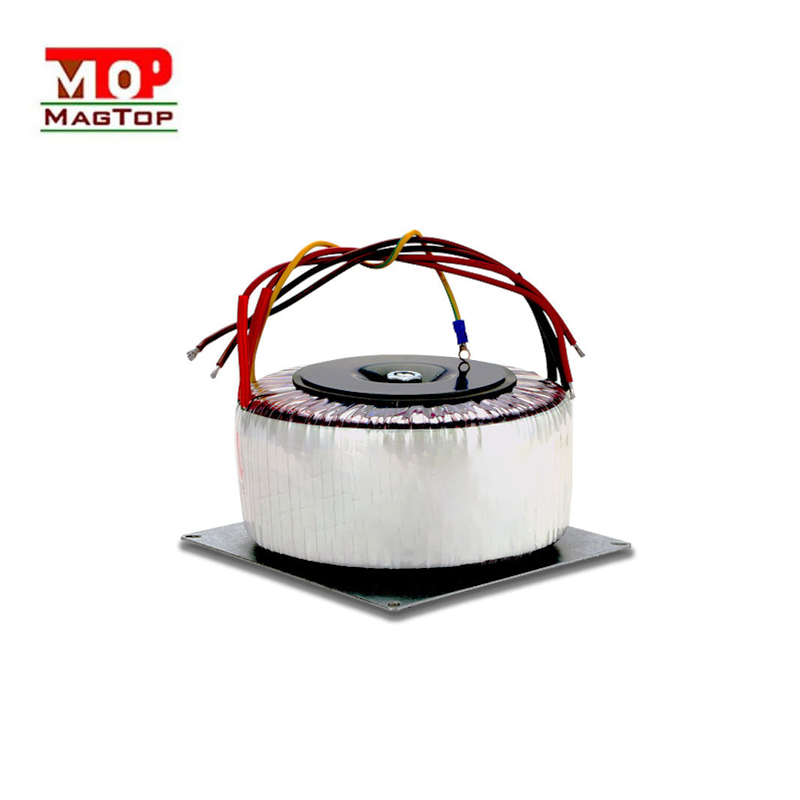
Toroidal transformers are available in different designs to meet the electrical and mechanical requirements of various applications. According to common industry classifications, they can generally be divided into three main types: standard power transformers, economical power transformers, and isolation transformers.
1. Standard Power Toroidal Transformers
Standard toroidal power transformers typically cover power ratings from 8VA to 1500VA. They are designed for applications requiring stable output voltage, good electrical performance, and reliable operation.
These transformers feature a relatively low voltage regulation rate and a full-load temperature rise of approximately 40°C. They can also withstand short-term overload conditions, making them suitable for equipment with relatively high performance requirements.
The primary winding typically uses Class B insulation materials rated at 130°C, such as polyester insulating film. At least three layers of insulation tape are required, with an AC withstand voltage test of 4000V for one minute.
2. Economical Power Toroidal Transformers
Economical toroidal transformers generally have power ratings ranging from 50VA to 1500VA. They are designed to reduce manufacturing costs while maintaining the required electrical performance.
These products are suitable for applications involving continuous operation without overloading. The insulation system typically uses Class A materials rated at 105°C, with an operating temperature limit of 60°C.
At full load, the output voltage deviation is generally controlled within 3%, providing reliable performance for cost-sensitive applications.
3. Isolation Toroidal Transformers
Isolation toroidal transformers typically cover power ratings from 50VA to 1000VA. They are mainly used in industrial equipment and medical applications where electrical safety and insulation performance are particularly important.
These transformers generally use at least four layers of Class B polyester film insulation between the primary and secondary windings. Their breakdown voltage requirement is greater than 4000V, and double-insulated wire must be used for the primary winding.
The maximum temperature rise is generally maintained below 45°C.
Each type of toroidal transformer has its own advantages. Selecting the appropriate model depends on the application's power requirements, insulation standards, operating environment, and cost considerations.