Pусский
 Deutsch
 Français
 Portugues
 Español
 العربية
 lingua italiana
 日本語
 한국어
 Türk dili


The internal structure of a high-frequency transformer depends on the coordinated design of its mechanical and magnetic components. Among these, the bobbin and ferrite core are particularly important because they influence winding arrangement, insulation design, magnetic performance, and overall product dimensions.
1. The Bobbin: Supporting the Windings
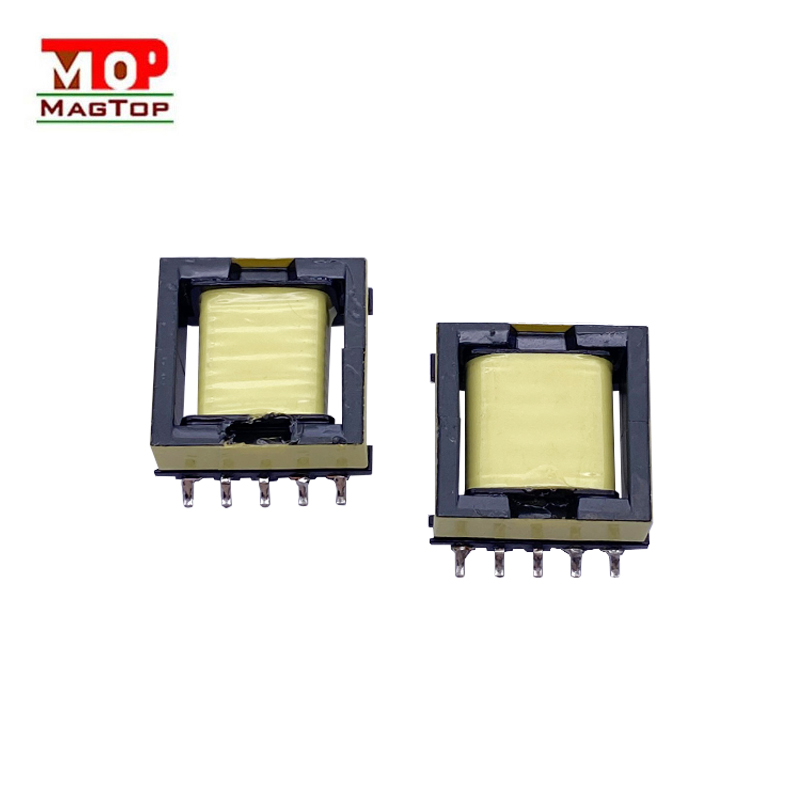
The bobbin is the insulating framework around which transformer windings are placed. It is commonly made from suitable insulating plastic materials and may include pins or terminals for electrical connections.
The bobbin's width, height, wall structure, and pin arrangement must match the intended design. These dimensions determine the available winding space and can affect the number of turns that fit into each layer.
For high-voltage transformers, the bobbin design must also consider insulation distances and the required separation between windings and terminals.
2. The Ferrite Core: Providing a Magnetic Path
High-frequency transformers commonly use ferrite magnetic cores. Ferrite materials are produced from magnetic ceramic compositions and are designed to provide suitable magnetic properties at high operating frequencies.
The core shape, material grade, and dimensions influence inductance, magnetic flux density, core loss, and temperature rise. Selecting an appropriate core is therefore essential to achieving the required transformer performance.
3. Matching the Bobbin and Core
The bobbin and core must be designed to fit together correctly. Their dimensions affect assembly, winding space, magnetic coupling, and the overall size of the transformer.
Different applications may require different core shapes and bobbin structures. For example, a compact power supply may prioritize small dimensions, while an industrial application may require greater insulation distances or improved thermal performance.
By carefully matching the bobbin, core, and winding structure, manufacturers can develop transformers suited to a wide range of electrical and mechanical requirements.