Pусский
 Deutsch
 Français
 Portugues
 Español
 العربية
 lingua italiana
 日本語
 한국어
 Türk dili


High-frequency transformers are widely used in switching power supplies, communication equipment, industrial electronics, and many other electronic devices. Although their size is often compact, their internal structure plays an important role in electrical performance and long-term reliability.
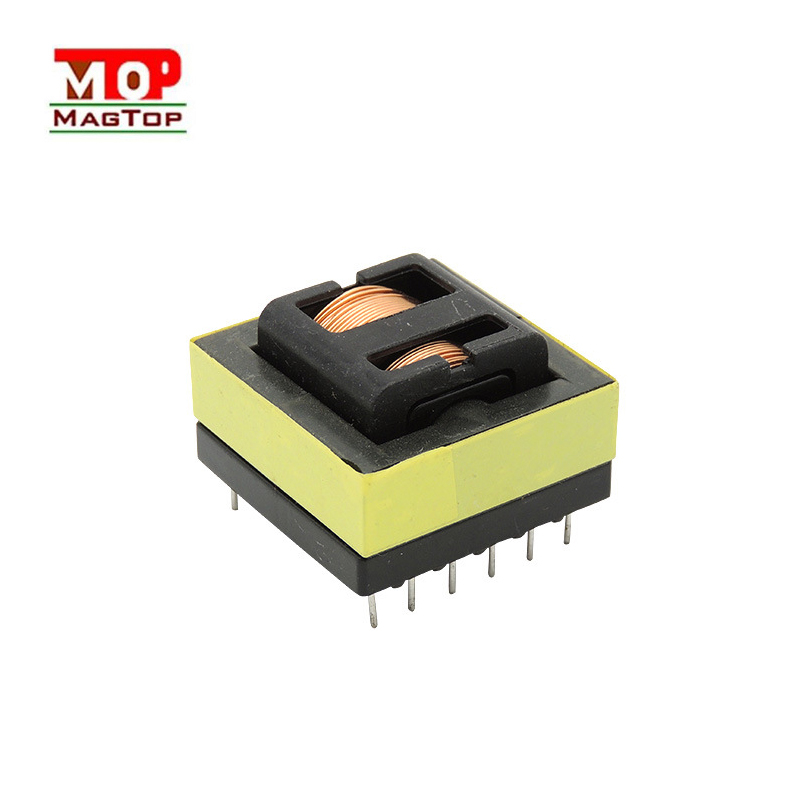
The main components of a high-frequency transformer include enameled copper wire, a bobbin, a magnetic core, and insulation materials such as adhesive tape.
1. Enameled Copper Wire
Enameled copper wire is one of the basic materials used in transformer manufacturing. The copper conductor carries current, while the thin insulating enamel coating helps prevent electrical contact between adjacent turns. Wire diameter, insulation type, and winding arrangement all affect the transformer's electrical and thermal performance.
2. Bobbin and Pins
The bobbin supports the windings and helps maintain their position during manufacturing and operation. Pins or terminals provide electrical connections between the windings and the external circuit. The bobbin's dimensions and structure must be suitable for the required winding arrangement and insulation distances.
3. Magnetic Core
The magnetic core provides a path for magnetic flux and plays a key role in energy transfer. Ferrite cores are commonly used in high-frequency transformers because of their suitable magnetic properties and relatively low core losses at high frequencies.
4. Insulation Tape
Insulation tape is used to separate windings, improve electrical insulation, secure wires, and support the required insulation structure. The tape material, thickness, width, and number of layers must be selected according to the transformer's design requirements.
Each component has a specific function, and their performance depends on how they work together. Careful material selection and manufacturing control help produce high-frequency transformers that meet the required electrical, mechanical, and safety standards.