
 Pусский
 Deutsch
 Français
 Portugues
 Español
 العربية
 lingua italiana
 日本語
日本語 한국어
한국어 Türk dili

In the landscape of domestic high-frequency transformer products, a notable trend is the avoidance of flat copper tape in favor of Litz wire. The rationale behind this choice is rooted in the challenges posed by flat copper tape in achieving the necessary flatness, especially at higher frequencies. The manufacturing intricacies are considerable, and any deviation from perfect flatness could result in substantial eddy current losses in the conductor. As a solution, Litz wires have become the go-to choice for high-frequency applications, ensuring efficient operation by mitigating eddy current losses.
Advantages of Litz Wire:
Simplified Manufacturing Process: Litz wire presents a simpler manufacturing process compared to the complexities associated with flat copper tape. This simplicity contributes to ease of production and potentially lowers manufacturing costs.
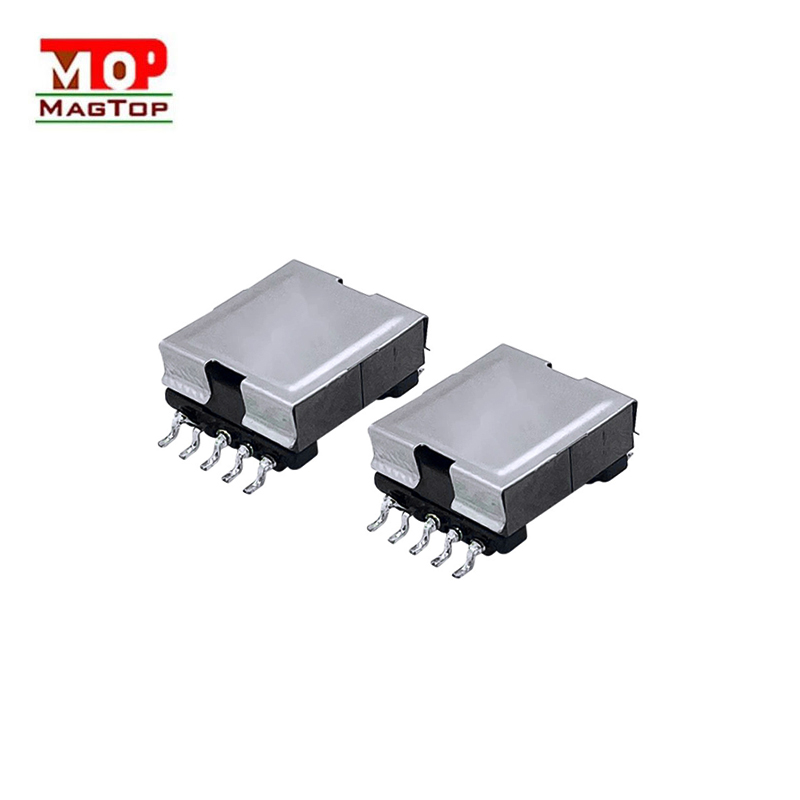
Disadvantages of Litz Wire:
Current Limitations: Litz wire is most effective in applications with lower currents. If the current surpasses a certain threshold, using numerous Litz wire strands becomes a necessity. This can increase the process cost, potentially surpassing that of copper tape.
Size Matters: Copper Tape vs. Litz Wire:
The choice between copper tape and Litz wire is often dictated by the relationship between the size of the magnetic core and the current. Litz wire finds its strength in scenarios with lower currents, while copper tape excels when dealing with higher currents.
Size Matters: Copper Tape vs. Litz Wire:
The choice between copper tape and Litz wire is often dictated by the relationship between the size of the magnetic core and the current. Litz wire finds its strength in scenarios with lower currents, while copper tape excels when dealing with higher currents.


