Pусский
 Deutsch
 Français
 Portugues
 Español
 العربية
 lingua italiana
 日本語
日本語 한국어
한국어 Türk dili


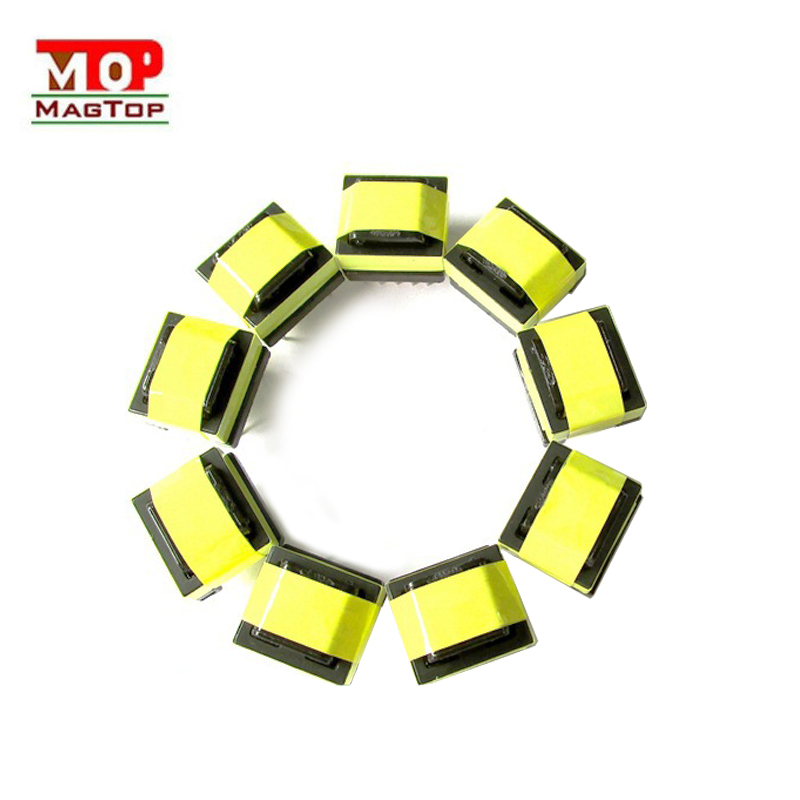
High frequency power transformers are pivotal in ensuring efficient power transfer and voltage regulation in various electronic systems. These transformers consist of an iron core (or magnetic core) and several coils, with the primary coil connected to the power source and secondary coils that receive the induced voltage.
The operation of high frequency power transformers is based on electromagnetic induction. When alternating current flows through the primary coil, it generates an alternating magnetic flux within the core, which induces a voltage in the secondary coil. Depending on the number of turns in the primary and secondary coils, the transformer can either increase or decrease the voltage. A primary coil with more turns than the secondary coil results in a step-down transformer, reducing the voltage, while a primary coil with fewer turns than the secondary coil creates a step-up transformer, increasing the voltage.
Despite these changes in voltage, the power transferred from the primary to the secondary coil remains equal, minus any losses. This efficiency makes high frequency transformers crucial in applications where precise voltage control and energy efficiency are paramount, such as in high-frequency power supplies, communication systems, and various industrial applications.