Pусский
 Deutsch
 Français
 Portugues
 Español
 العربية
 lingua italiana
 日本語
日本語 한국어
한국어 Türk dili

Introduction :
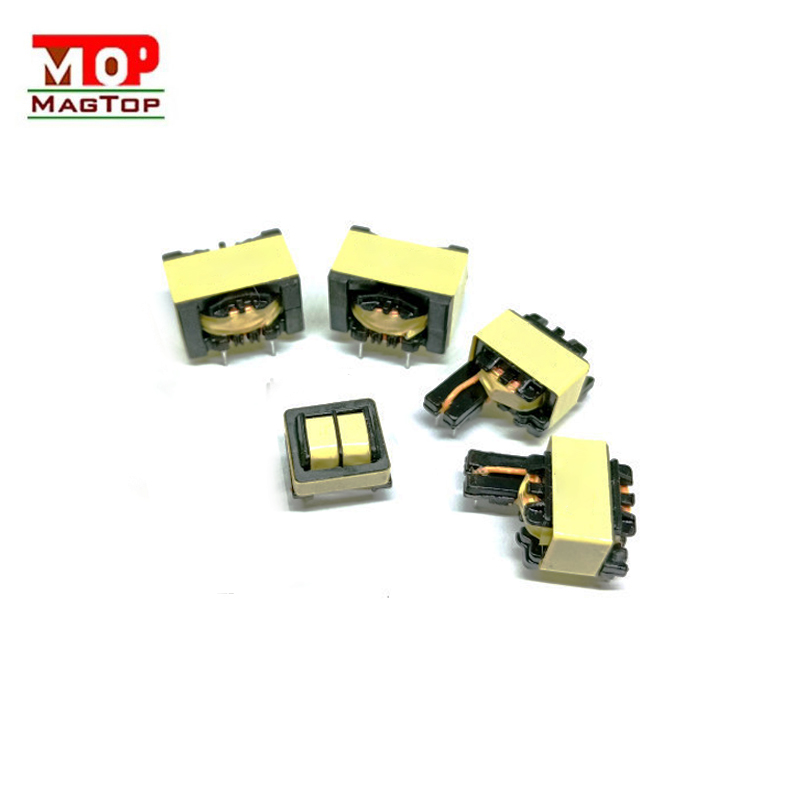
The high-frequency transformer is the most important component of the switching power supply. There are many topological structures in the switching power supply. For example, in the half-bridge power conversion circuit, when working, the two switching transistors are turned on in turn to generate a 100kHz high-frequency pulse wave, which is then transformed through the high-frequency transformer to output AC power. The ratio of the number of turns of each winding coil of the high-frequency transformer determines the output voltage.
The high-frequency transformer is the most important component of the switching power supply. There are many topological structures in the switching power supply. For example, in the half-bridge power conversion circuit, when working, the two switching transistors are turned on in turn to generate a 100kHz high-frequency pulse wave, which is then transformed through the high-frequency transformer to output AC power. The ratio of the number of turns of each winding coil of the high-frequency transformer determines the output voltage.
The most conspicuous in the typical half-bridge transformer circuit are the three high-frequency transformers: the main transformer, the drive transformer and the auxiliary transformer (standby transformer). Each transformer has its own measurement standard in national regulations. For example, for the main transformer, as long as the power supply is more than 200W, its core diameter (height) must not be less than 35mm. For the auxiliary transformer, when the power supply power does not exceed 300W, its core diameter is enough to reach 16mm.
Working principle:
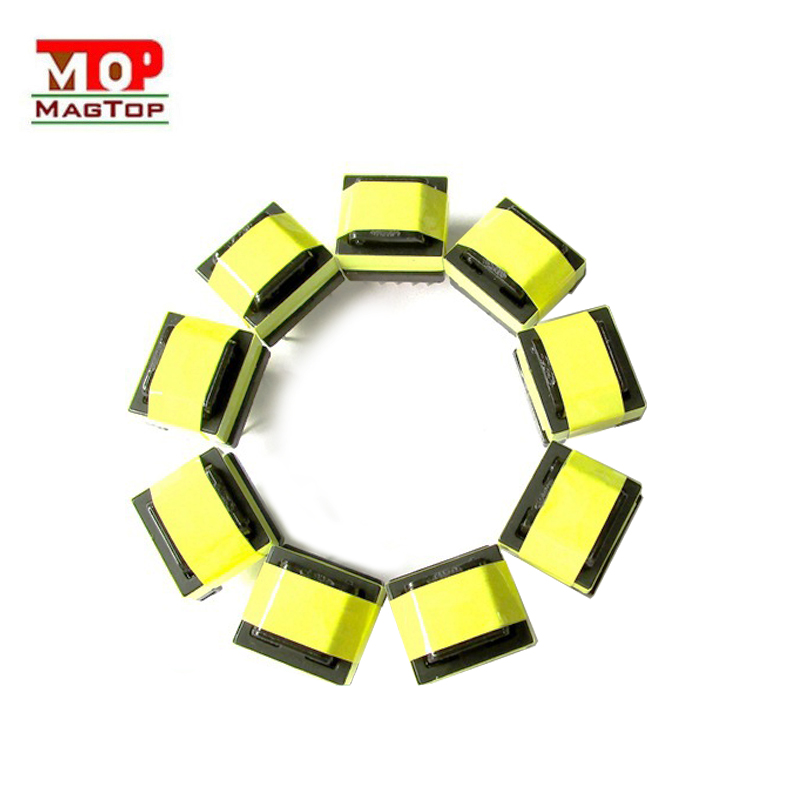
A transformer is a device that transforms AC voltage, current and impedance. When AC current flows through the primary coil, AC magnetic flux is generated in the iron core (or magnetic core), inducing voltage (or current) in the secondary coil.
A transformer is a device that transforms AC voltage, current and impedance. When AC current flows through the primary coil, AC magnetic flux is generated in the iron core (or magnetic core), inducing voltage (or current) in the secondary coil.
The transformer consists of an iron core (or magnetic core) and a coil. The coil has two or more windings, of which the winding connected to the power supply is called the primary coil, and the remaining windings are called secondary coils.