Pусский
 Deutsch
 Français
 Portugues
 Español
 العربية
 lingua italiana
 日本語
日本語 한국어
한국어 Türk dili

Magnetic core inductors are essential components in electronics, and their performance is intricately tied to their frequency characteristics. Several factors influence these characteristics, and understanding them is key to optimizing the operation of magnetic core inductors.
1. Core Material Loss: The type of core material used in magnetic core inductors has a significant impact on their performance. Core material loss, particularly due to hysteresis and eddy currents, can cause the quality factor (Q) of the inductor to exhibit a negative slope from its maximum value. Careful selection of core materials is crucial to minimize this effect and enhance inductor efficiency.
2. Dielectric Loss: Dielectric loss becomes a prominent factor in the performance of magnetic core inductors, especially in high-frequency bands. This type of loss can lead to energy dissipation within the dielectric materials used in the inductor, resulting in reduced overall efficiency.
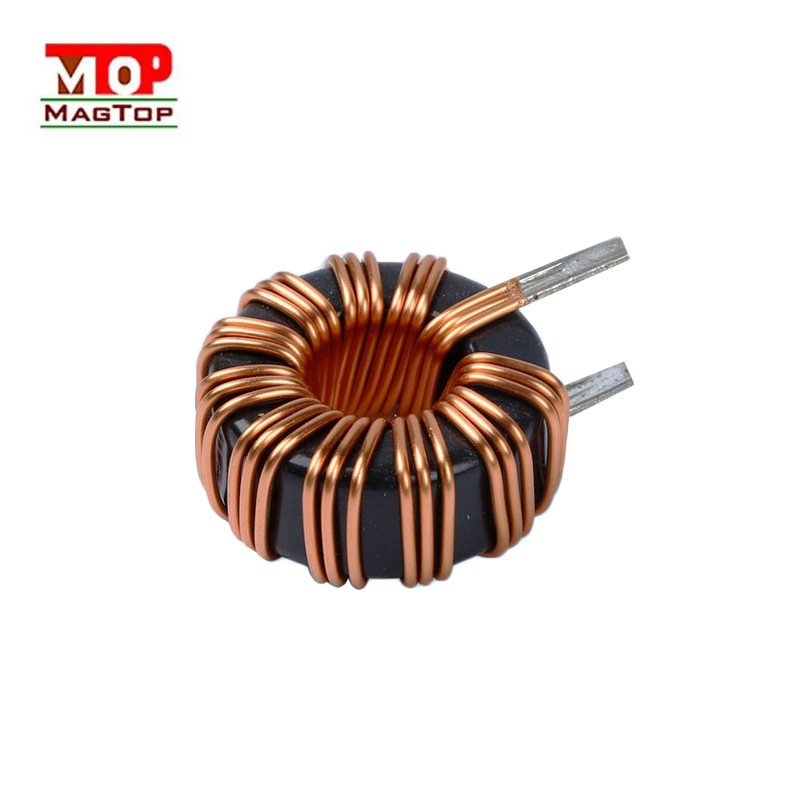
3. Self-Resonance Effect: The self-resonance effect, arising from the interaction of distributed capacitance and inductance within the inductor, also plays a critical role. Self-resonance negatively affects inductor performance, particularly in high-power applications, by causing impedance peaks at specific frequencies.
Minimizing distributed capacitance is a crucial consideration in the design of magnetic core inductors. It involves careful wirewound design, ensuring that capacitances between wires, layers, and between the winding and the core are minimized. By reducing distributed capacitance, the self-resonant frequency can be pushed to higher frequencies, improving the overall performance and efficiency of the magnetic core inductor.