Pусский
 Deutsch
 Français
 Portugues
 Español
 العربية
 lingua italiana
 日本語
日本語 한국어
한국어 Türk dili

Modern computer motherboards integrate high-frequency, digital, and analog circuits within limited space. During operation, these circuits generate significant electromagnetic interference (EMI), which can disrupt both internal signals and external electronic systems.
EMI is typically categorized into two forms: differential mode (serial mode) interference and common mode interference. Differential mode interference occurs between two signal lines, following the same path as the signal current. In contrast, common mode interference arises from the voltage difference between signal lines and the ground, often resulting in unwanted radiation through cables.
High-speed interfaces such as USB and IEEE 1394 are particularly vulnerable, as common mode currents can easily propagate along data lines and generate electromagnetic radiation. Regulatory bodies, including the Federal Communications Commission, CISPR, and China's GB9254 standard, impose strict limits on such emissions.
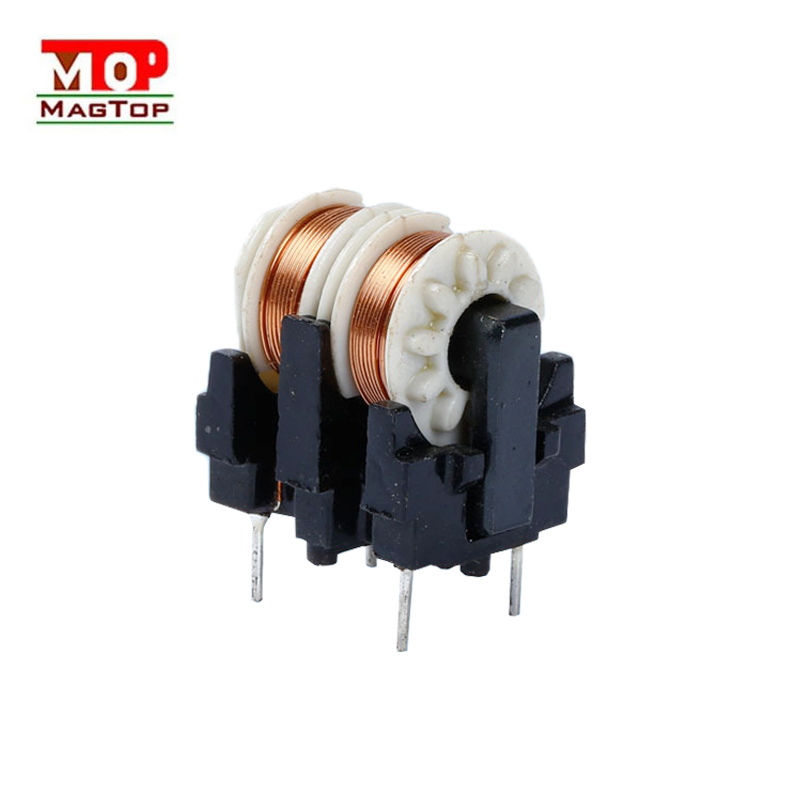
To mitigate these challenges, engineers are increasingly relying on filter circuits incorporating common mode inductors. These components act as bidirectional filters, suppressing both incoming and outgoing electromagnetic interference, ensuring system reliability and compliance.
EMI is typically categorized into two forms: differential mode (serial mode) interference and common mode interference. Differential mode interference occurs between two signal lines, following the same path as the signal current. In contrast, common mode interference arises from the voltage difference between signal lines and the ground, often resulting in unwanted radiation through cables.
High-speed interfaces such as USB and IEEE 1394 are particularly vulnerable, as common mode currents can easily propagate along data lines and generate electromagnetic radiation. Regulatory bodies, including the Federal Communications Commission, CISPR, and China's GB9254 standard, impose strict limits on such emissions.
To mitigate these challenges, engineers are increasingly relying on filter circuits incorporating common mode inductors. These components act as bidirectional filters, suppressing both incoming and outgoing electromagnetic interference, ensuring system reliability and compliance.