Pусский
 Deutsch
 Français
 Portugues
 Español
 العربية
 lingua italiana
 日本語
 한국어
 Türk dili


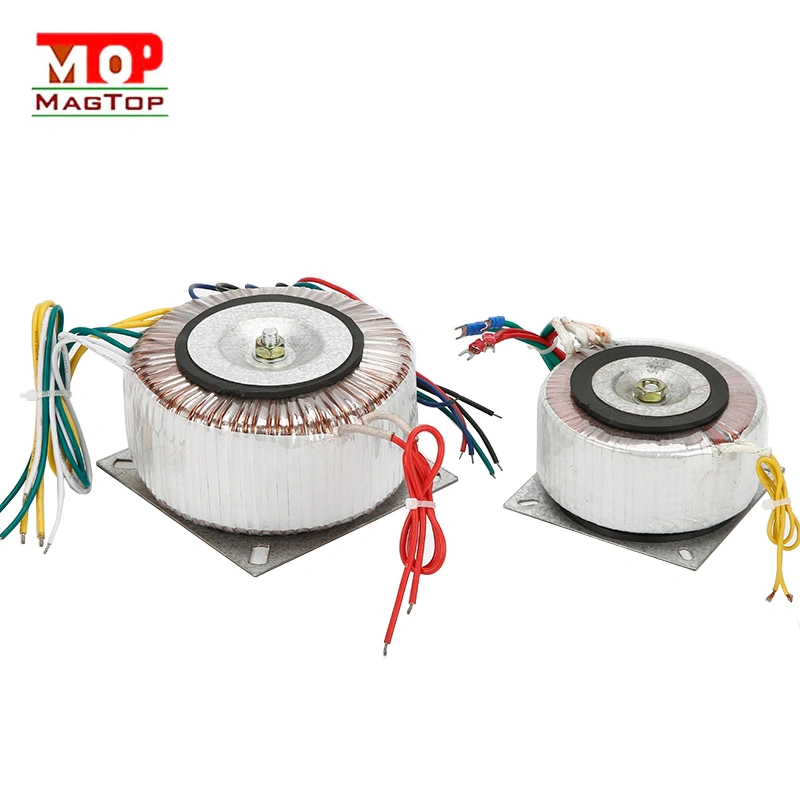
Electrical safety is a critical consideration in the design of industrial and medical electronic equipment. Isolation toroidal transformers provide an effective solution by electrically separating the input and output circuits while maintaining the required power transfer.
Unlike standard power transformers, isolation transformers place greater emphasis on insulation performance and electrical safety. Their primary and secondary windings are separated by multiple layers of insulating materials to reduce the risk of electrical breakdown.
Industrial isolation toroidal transformers typically have power ratings ranging from 50VA to 1000VA. Their insulation systems generally include at least four layers of Class B polyester film between the primary and secondary windings. The breakdown voltage must exceed 4000V, while double-insulated wire is required for the primary winding.
Temperature control is another important factor. The maximum temperature rise is generally designed to remain below 45°C, helping ensure stable and reliable operation.
Special Requirements for Medical Isolation Transformers
Medical isolation transformers have additional safety requirements due to their use in environments where electrical protection is particularly important.
In addition to the general insulation requirements, medical isolation transformers must meet the applicable safety standards for medical electrical equipment, such as UL 544 where specified by the product design and certification requirements.
Key design considerations include:
Thermal protection for both primary and secondary windings.
A minimum clearance of 13mm between the windings and the grounded copper shield.
Reliable insulation between primary and secondary circuits.
Effective temperature control during continuous operation.
These design features help improve electrical safety and reduce potential risks associated with leakage currents and insulation failure.
As medical technology and industrial automation continue to advance, reliable isolation transformers remain an important part of electrical power systems that require enhanced insulation and safety performance.