Pусский
 Deutsch
 Français
 Portugues
 Español
 العربية
 lingua italiana
 日本語
日本語 한국어
한국어 Türk dili

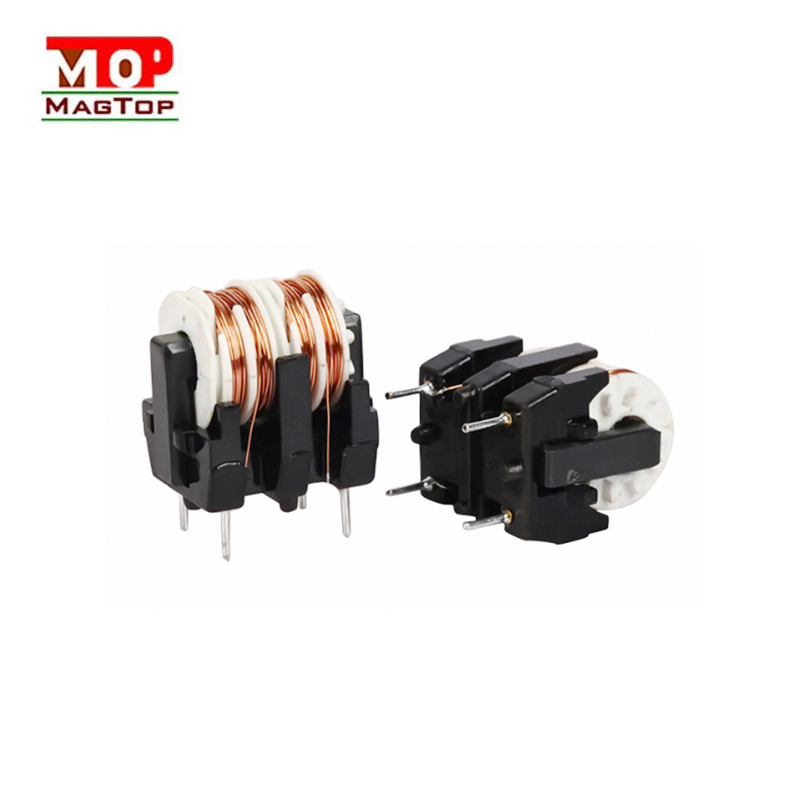
In modern switching power supplies and electronic equipment, common mode chokes are widely used to suppress unwanted electromagnetic noise. The effectiveness of these components depends heavily on maintaining high inductance under actual operating conditions.
One major factor affecting performance is the DC or low-frequency bias current generated during operation. When the magnetic core experiences excessive current stress, the inductance can decrease, causing a reduction in common mode attenuation.
The LISN measurement technique evaluates this degradation by comparing emission levels at different current conditions. The minimum emission level represents filter performance without bias current, while the peak emission level reflects the impact of current-induced saturation.
The ratio between peak and minimum emission, known as the degradation factor, is an important indicator of common mode choke performance. A high degradation factor suggests that the magnetic core is not being utilized effectively. High-quality filter designs typically achieve an inherent degradation factor of approximately 2–4.
This degradation is mainly caused by two effects:
1.Reduction of inductance due to charging current flowing through the rectifier circuit.
2.Forward and reverse conduction characteristics of the bridge rectifier.
By analyzing these factors, engineers can improve choke designs and ensure stable EMI suppression throughout the entire operating range.
One major factor affecting performance is the DC or low-frequency bias current generated during operation. When the magnetic core experiences excessive current stress, the inductance can decrease, causing a reduction in common mode attenuation.
The LISN measurement technique evaluates this degradation by comparing emission levels at different current conditions. The minimum emission level represents filter performance without bias current, while the peak emission level reflects the impact of current-induced saturation.
The ratio between peak and minimum emission, known as the degradation factor, is an important indicator of common mode choke performance. A high degradation factor suggests that the magnetic core is not being utilized effectively. High-quality filter designs typically achieve an inherent degradation factor of approximately 2–4.
This degradation is mainly caused by two effects:
1.Reduction of inductance due to charging current flowing through the rectifier circuit.
2.Forward and reverse conduction characteristics of the bridge rectifier.
By analyzing these factors, engineers can improve choke designs and ensure stable EMI suppression throughout the entire operating range.