
 English
 Pусский
 Deutsch
 Portugues
 Español
 العربية
 lingua italiana
 日本語
日本語 한국어
한국어 Türk dili

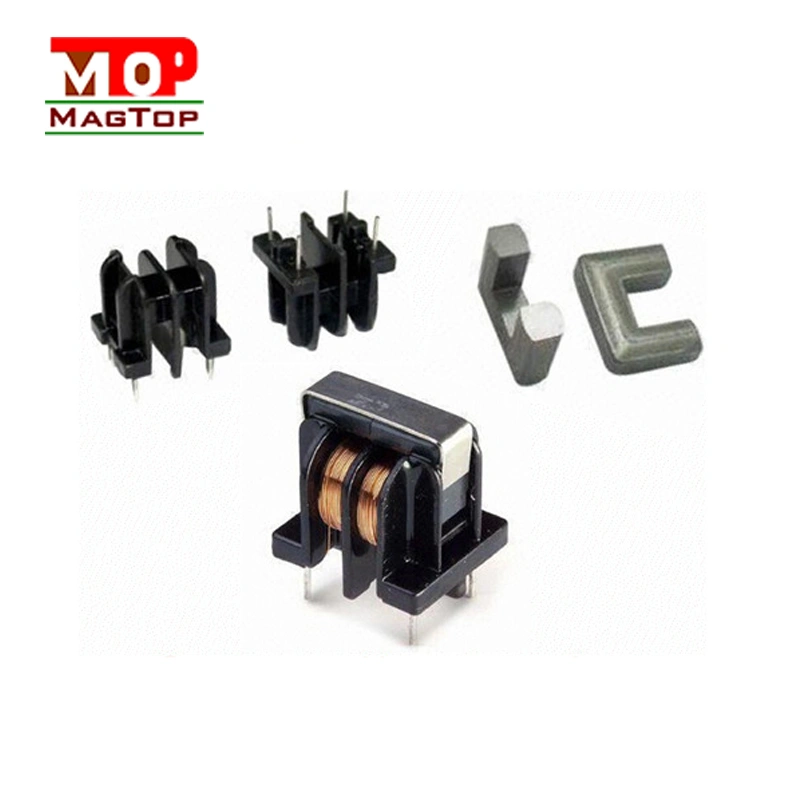
Nouvelles de la société | selfs de mode commun | Nouvelles de l'industrie | transformateur|RJ45 connectors
Lors du choix d'un filtre, les trois paramètres les plus importants sont le courant nominal, la tension nominale et la fréquence de coupure.
(1) The rated current refers to the working current flowing through the filtre. When the operating current of the power line filtre exceeds the rated current, it will not only cause the filtre to overheat, but also cause the low-frequency filtreing performance of the filtre to decrease. This is because the inductance in the filtre will saturate in the case of a large current, which will reduce the actual inductance. Therefore, it is very necessary to leave a certain margin when determining the rated working current of the filtre. Generally, the rated current value of the filtre should be 1.5 times the actual current value.
(2) Determination of rated voltage. If the wires to be filtreed will not be impacted by high voltages such as electrostatic discharge, electromagnetic pulse, surge, etc., the working voltage of the circuit is the rated working voltage of the filtre. If this is not the case, for example, the cables dragged outside the equipment will be impacted by high voltage, and this situation needs to be fully considered and sufficient margin is left.
(3) Determination of cut-off frequency. The selection of the cutoff frequency must ensure that the passband of the filtre covers the bandwidth of the functional signal, ensure the normal operation of the device, and filtre out unnecessary high-frequency interference to the greatest extent possible. For analog signals, the cutoff frequency is well defined, as long as the cutoff frequency is greater than the bandwidth of the signal. For digital pulse signals, the cutoff frequency can be set to 1/lr, where tr is the rise/fall time of the pulse. If it is a periodic pulse signal, 15 times the pulse repetition frequency can also be taken as the cut-off frequency.
Lors du choix d'un filtre, les trois paramètres les plus importants sont le courant nominal, la tension nominale et la fréquence de coupure.
(1) The rated current refers to the working current flowing through the filtre. When the operating current of the power line filtre exceeds the rated current, it will not only cause the filtre to overheat, but also cause the low-frequency filtreing performance of the filtre to decrease. This is because the inductance in the filtre will saturate in the case of a large current, which will reduce the actual inductance. Therefore, it is very necessary to leave a certain margin when determining the rated working current of the filtre. Generally, the rated current value of the filtre should be 1.5 times the actual current value.
(2) Determination of rated voltage. If the wires to be filtreed will not be impacted by high voltages such as electrostatic discharge, electromagnetic pulse, surge, etc., the working voltage of the circuit is the rated working voltage of the filtre. If this is not the case, for example, the cables dragged outside the equipment will be impacted by high voltage, and this situation needs to be fully considered and sufficient margin is left.
(3) Determination of cut-off frequency. The selection of the cutoff frequency must ensure that the passband of the filtre covers the bandwidth of the functional signal, ensure the normal operation of the device, and filtre out unnecessary high-frequency interference to the greatest extent possible. For analog signals, the cutoff frequency is well defined, as long as the cutoff frequency is greater than the bandwidth of the signal. For digital pulse signals, the cutoff frequency can be set to 1/lr, where tr is the rise/fall time of the pulse. If it is a periodic pulse signal, 15 times the pulse repetition frequency can also be taken as the cut-off frequency.


