
 English
 Pусский
 Deutsch
 Français
 Portugues
 Español
 العربية
 lingua italiana
 日本語
日本語 한국어
한국어

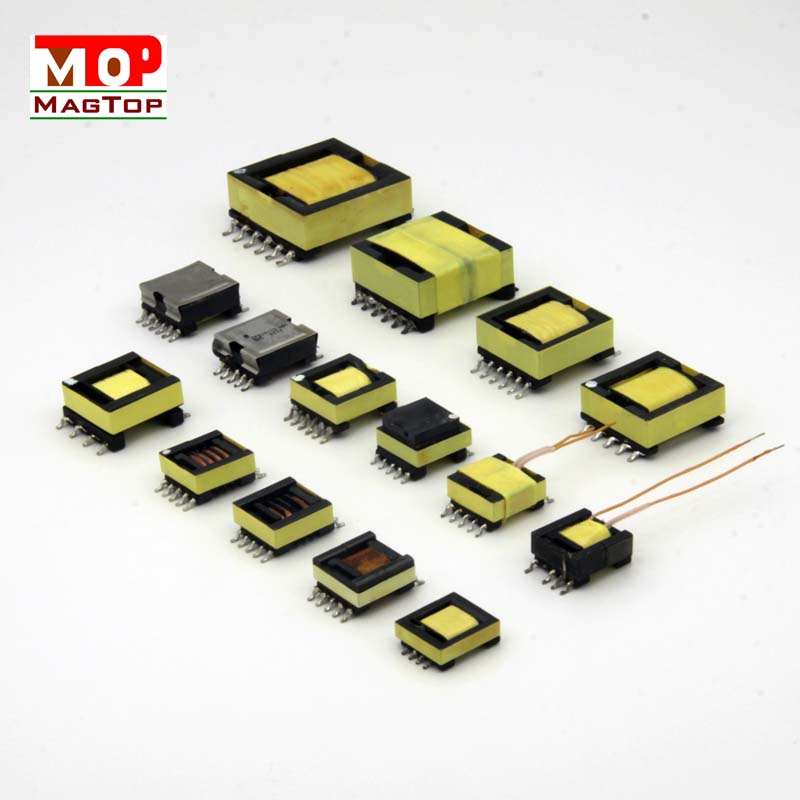
Şirket Haberleri | ortak mod bobinleri | Endüstri Haberleri | trafo|RJ45 connectors
A high-frequency trafo is a special type of high-frequency trafo commonly used in power systems, especially when starting up a buck. So what are the two characteristics of high-frequency trafos?
1. The primary of the high-frequency trafo shares a set of coils, and the voltage can be raised and lowered with different taps. If there are fewer taps than ordinary coils, this section is used for bucking, otherwise it is used for boosting.
2. Compared with isolated high-frequency trafos of the same capacity, high-frequency trafos have the characteristics of small size and light weight, and at the same time greatly reduce their production costs. High-frequency trafos generally use magnetic cores instead of iron cores. The high-frequency trafo is small in size, with a small number of turns in the primary coil and high efficiency.
A high-frequency trafo, as the name suggests, is a power electronic instrument that changes the voltage. It is a device that uses the principle of Faraday electromagnetic induction to change the AC voltage, mainly composed of a primary coil, an iron core and a secondary coil. It can realize the matching conversion of input and output current, voltage, and impedance, and can also achieve primary physical isolation. According to the different primary voltages, it can be divided into step-down high-frequency trafos, step-up high-frequency trafos, isolated high-frequency trafos, vb.
A high-frequency trafo is a special type of high-frequency trafo commonly used in power systems, especially when starting up a buck. So what are the two characteristics of high-frequency trafos?
1. The primary of the high-frequency trafo shares a set of coils, and the voltage can be raised and lowered with different taps. If there are fewer taps than ordinary coils, this section is used for bucking, otherwise it is used for boosting.
2. Compared with isolated high-frequency trafos of the same capacity, high-frequency trafos have the characteristics of small size and light weight, and at the same time greatly reduce their production costs. High-frequency trafos generally use magnetic cores instead of iron cores. The high-frequency trafo is small in size, with a small number of turns in the primary coil and high efficiency.
A high-frequency trafo, as the name suggests, is a power electronic instrument that changes the voltage. It is a device that uses the principle of Faraday electromagnetic induction to change the AC voltage, mainly composed of a primary coil, an iron core and a secondary coil. It can realize the matching conversion of input and output current, voltage, and impedance, and can also achieve primary physical isolation. According to the different primary voltages, it can be divided into step-down high-frequency trafos, step-up high-frequency trafos, isolated high-frequency trafos, vb.


